Trigger stacking: how we set our dogs up to fail

FBpage trigger stacking

When we adopt a dog, what we expect is for them to be happy. We like to think that they get what’s happening and that it’s all blooming marvellous. We tell ourselves that they know what’s going on and that they’re going to love it. Many of us are guilty of thinking that love will be enough and how we handle things after the adoption is unimportant. We’re guilty of thinking that all we need to do is buy a new dog bed, and get a new collar, harness and lead. We concern ourselves with the physical aspects of adoption, not the emotional.

I know. I’ve been that person.

When I adopted Amigo, what I told myself was that he was thinking:

Lady, you are the best person I ever met. I’m going to be such a good boy! We are going to have the most amazing adventures together! I’m just going to lick you and lick you and lick you. Thank you! Thank you so much. See my waggy tail? That’s how happy I am! 

What we don’t think is that really, they’re most likely thinking:

Who the hell is this woman? She seems very nice. I wish she’d stop looking at me. Please don’t touch me. Don’t touch me… Don’t touch me. I don’t even know you!!! She’s touching me. I don’t like hands. Hands hurt. Why is she touching me? Where are we going? What’s going on? What’s this tiny thing? What’s that noise? What’s she doing? Where does she want me to sit? It sure smells funny in here. What the f@*&’s that noise? Why is the seat moving? OH MY GOD this thing is moving!!!! I want to get out. Can I get out. How do I get out? Where is the door? How can I get out? Stop touching me! Stop looking at me! 

Not only did I pop him in the car, I took him to a new house. I introduced him to new animals. I set him up to be stressed and without really considering it (he was the fifth dog I’d adopted) I didn’t think about the stress he was feeling. It took five months to wrestle him back to a place of calm. Sorry Meegie. I wish I could start again. Luckily, he forgave me for this and the rest of our days were spent building his trust.

The modern world is stressful to a dog. They are living in a world that does not always make sense to them. It’s akin to moving to a different country with a different language and very different customs. Notch that discomfort up a little and you get a sense of what it must be like to live in a dog’s world. If your dog has ever barked at anything new, you may have laughed it off, because we simply don’t know what will freak our dogs out. Tilly spent a good five minutes barking at the washing basket in the garden yesterday. I don’t know why. She’s seen it before. It’s been in the garden before. Nothing was different in most ways than every other time the laundry basket has been in the garden. But yesterday it spooked her. Heston once spent a good while barking at a sieve. A stone cross also freaked him out. Amigo doesn’t like to be inside during storms. Molly used to bark at snowmen. It’s common for dogs to bark at hoovers, lawnmowers and other animals. These are fearful responses to things that don’t make sense to dogs.

But barking is not the only way that we can see an animal is stressed.

Creatures feel fear and have a stress response. This we know. When something makes us feel afraid, our bodies have surprisingly similar responses as a dog’s. Adrenaline is produced. Our heart rate increases. Our brains become less capable of making choices as our fight-or-flight response kicks in. Once the brain says, ‘hey I don’t like this!’ the thalamus gives us a shot of hormones that set us off on a very typical “stress pathway”. Ever tried to reason with someone who’s red in the face? Ever tried to get your dog back under control when they’re barking at a stranger? You’ll know how hard it is to overcome the stress response. It’s not that they’re not listening; it’s that they can’t listen.

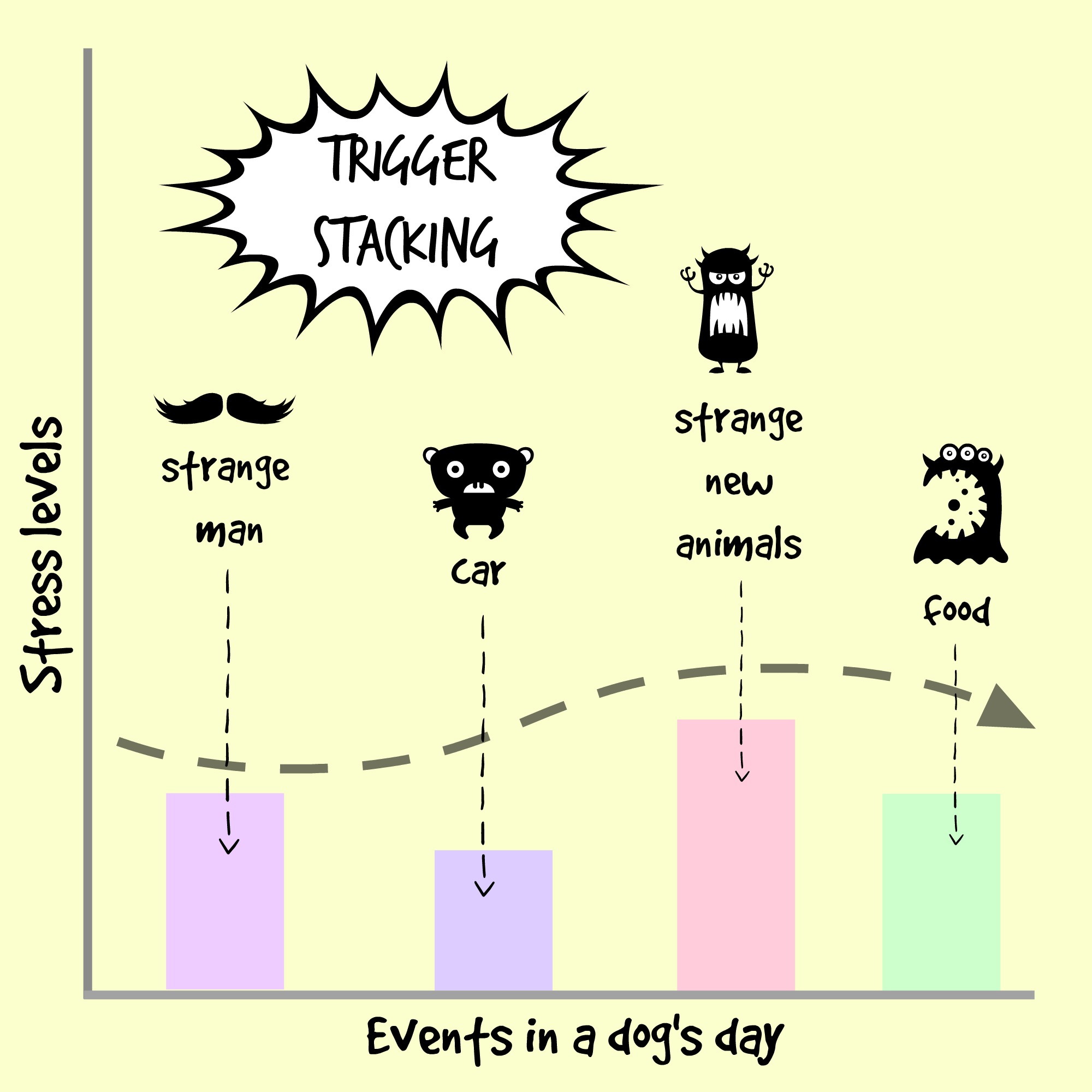
What normally happens in a dog’s ordinary day is that they meet a series of stress-inducing triggers. If you’ve socialised them well and habituated them to these triggers when they are young, they will most probably learn that these things are nothing to be afraid of. If you don’t, you’ve got an uphill battle to show them that a strange man in a hat is nothing to be afraid of. When we adopt an adult dog, we have no idea what they have been socialised with and what is a trigger that sets off that stress response.

For the most part, our dogs meet an unfamiliar trigger and then they move on. They may growl, show their teeth, snap or bark at it as they attempt to “fight” the trigger, or they may run away to a safe distance and hide if they are in “flight” mode. The other week, someone dropped a sack of fertiliser by the side of the field. Heston did both of these things: he stood, he stared, his hackles went up, he growled. The thing didn’t move. He went a little closer and growled more in case it hadn’t heard him. Then he barked at it. It didn’t care. He went closer, barked and then backed off. He did this progressively, getting gradually closer until he’d decided that it was nothing to be scared of, barking, retreating, barking, retreating.

When we start down the stress response pathway, adrenaline is produced to help us run or fight. Cortisol is also produced. This is important and we’ll come back to it later. Normal responses to stress include avoidance (not looking at it, backing off, seeking shelter) defense aggression (growling, snapping, barking) looking for contact with humans or other animals for reassurance (hiding between your legs, often!) seeking attention from a bonded human or animal. When dogs can’t escape or attack, you will see other behaviours too. Lip-licking, flat ears, tense faces, panting, low body posture, seeking escape, slow movements. They may be reluctant to take a treat or they may snatch when they normally wouldn’t. This clearly has implications for positive training and counter-conditioning to overcome the response.

Normally, the trigger goes away and the situation returns to normal. The body stops making stress hormones and within minutes to hours, most of those hormones have dissipated. The dog learns to tolerate these small events and episodes. Cats in the garden, postal workers, teams of cyclists going past… they’re strange and unfamiliar events and your dog will have periods between them to recover.
trigger stacking1

But what we do with a shelter dog is take an unfamiliar dog and give it a short, sharp shock of everything we know to be stressful. We take a dog who is already stressed. Even two weeks in the shelter is enough to have long-lasting consequences on the stress hormones and body, especially if they have been kept on their own.

Shelters are good at recognising unnatural stress responses for dogs, but there aren’t often solutions to this. Displacement activities may be evident (licking, grooming and eating stuff they shouldn’t) as well as stereotypical responses such as circling, excessive grooming, tail chasing, tail biting, excessive drinking, fence-line running, anorexia or excessive eating (yes, dogs comfort-eat too) and dogs may even hallucinate, chasing imaginary flies or staring into space.

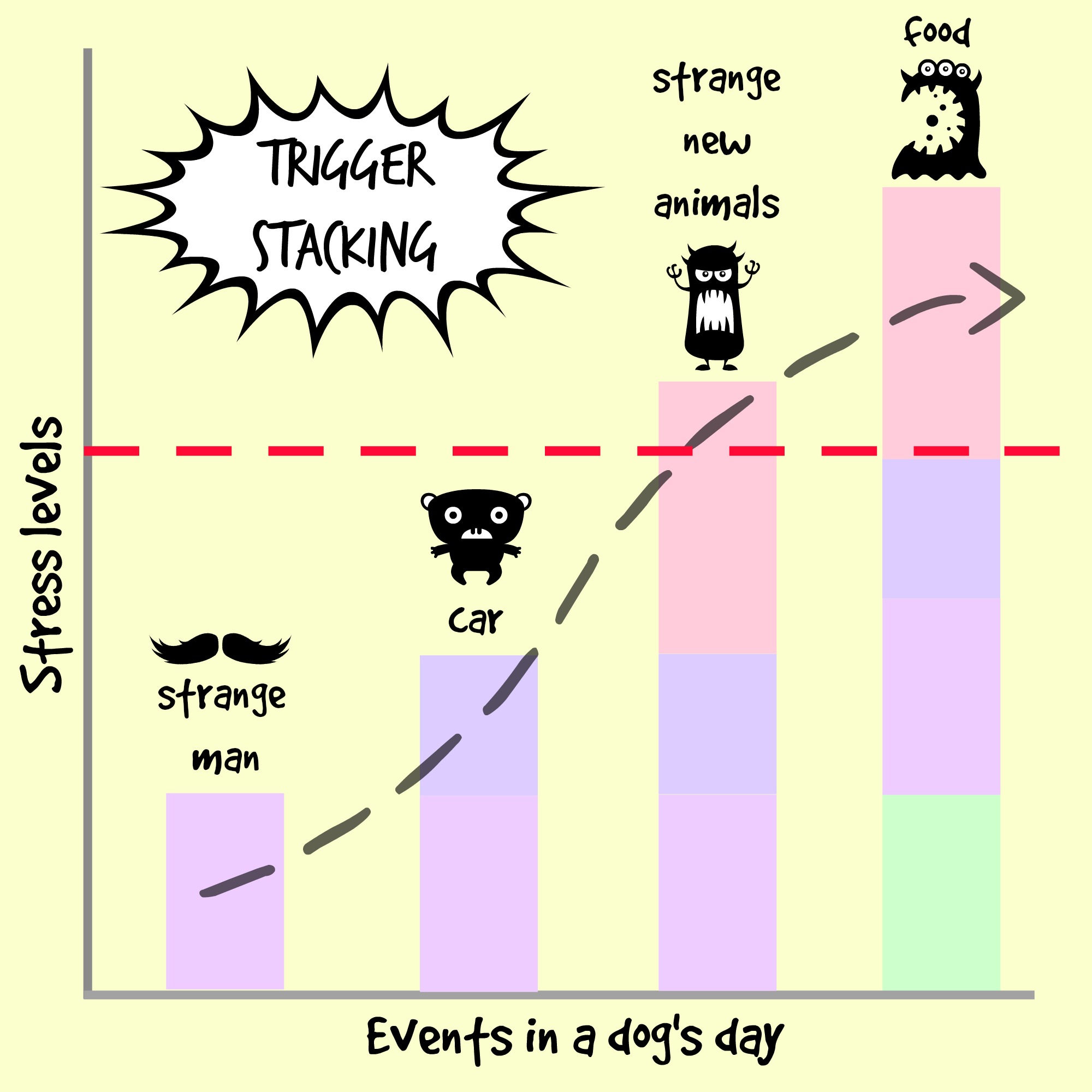
But there are many dogs who do not exhibit such behaviours in kennel environments, and we may be unaware that they are very close to the point at which they cannot control their responses or when it all becomes too much for them. We call this point the “threshold” and it’s marked in red on the diagram below.

When we take a dog and subject it to a range of new and stressful experiences, we stack those triggers all together, and we are not allowing their bodies to deal with the triggers we are subjecting them to. In one short hour, everything changes. They go from an austere environment where the majority of dogs show some signs of stress, and we think that what we are doing is comforting and reassuring. It isn’t. We introduce them to new people. We may put them in a car, which they may never have experienced except for a brief trip to the pound or their journey to the refuge. We take everything in their world and turn it upside down.

And instead of being able to tolerate the stress, we don’t allow sufficient time between all of the changes, and we stack the triggers so that they build up, one on top of another.
trigger stacking 2

Once they pass the red line, you are going to see exaggerated stress responses. Stares and teeth displays or pinned ears and avoidance techniques can turn into defensive attacks. This might just be a good old bark or grumble. They may urinate (I showed Tilly a new dog coat once and she did this…. I called her Tilly Piddle for a reason!) They might “give in” completely, overwhelmed by fear. They may try to run away or hide. In French, we say se sauver, which literally means they try to save themselves. Shutting down completely, trying to escape or behaving offensively when they can’t are all ways dogs can try to deal with threats.

There are lots of things you can do to avoid this situation.

Visiting the refuge often to meet the dog and spending at least an hour with the dog before you adopt them is one of those things. For dogs showing signs of an unnatural stress response (licking or circling, bark displays) you may want to sit in with them for a couple of hours, doing absolutely nothing. Sometimes just being around the dog is enough. Give them time to get used to your smell. Leave some clothes if you’re sure that they won’t shred them, or take some of your dirty laundry and give them time to investigate your t-shirts and pillowcases at a distance from you. We know smell is really important, and we often put our hands out for dogs to smell. Whilst this is incredibly unwise and dogs have absolutely no need for us to put out our hands to smell, the principle is the right one. Quite often, when I meet a strange dog, I just stand and let them give me a very good interrogation. I don’t speak to them. I don’t move. I just stand loosely and neutrally and let them sniff my boots, my jacket and my trousers if they want to approach me. If they don’t, as long as the dog is not likely to take your clothes and tear them apart, putting down some items of clothing or bedding and letting the dog investigate in their own time can really help them get to know you.

You might not want to use food at first. Food can often bring dogs closer to us than they would naturally choose to be. That said, it can speed things up with the right dog. Rather than offering the food from your hand which has the tendency to bring dogs in closer than they might naturally choose to be, try things where you leave the food and where you move away, or where the dog has a chance to move away.

If you’re going to use food, games like ‘Party in my footsteps’ or Suzanne Clothier’s ‘Treat and Retreat’ can help.

Party In My Footsteps
Non-threatening Treat and Retreat

Giving them a small amount of high-quality treats will show you that their stress levels have gone down enough to think of moving on to the next stage. You might even want to continue these routines in your home when you get back. Heston accepting treats when he met Tobby was my cue that he was sufficiently unstressed to move in a bit. But take your time. Though the adrenaline will have dispersed, the cortisol will not.

I was also really glad to see a lady taking the time to introduce her new dog to her car, spending a good few minutes over a few days getting him used to being in it, then turning the engine on, and so on. Not all dogs will need this if they have been used to getting in cars as a puppy. I’m pretty sure Heston would hop in anybody’s car given the chance. Cars mean adventures to my dogs because what happens after being the car is 99% good (except those vet trips!) But for a fearful or anxious dog, the guidance she’d received will certainly help the dog feel more comfortable.

If you have other dogs, be careful how you introduce them and take your time. When Tilly and Saffy arrived here after their car journey, I just randomly let them meet Molly, the new house, a whole load of strange men… no wonder Tilly quickly turned to submissive urination and excessive drinking. I’d say it took a good four or five months for her behaviour to return back to “normal”. You know my story of Amigo already. That ended with five months of serious retraining. Ralf… I got smart. Tobby… even smarter. And guess what? Those dogs weren’t stressed out. I doubt whether Ralf ever got stressed, since he was a big, chilled-out mattress-back. Tobby certainly has stress responses: he is happy to run away and he has the potential to bite. But I like to think that I did everything I could to avoid walloping those triggers one on top of each other that first day home.

There is no better guide to introductions than this one from Roz Pooley aka The Mutty Professor, and Rachel Trafford.

Introducing A New Dog

It works just as well with newly adopted dogs, with dogs on their own and with dogs who you’re fostering. I really can’t recommend this video enough. It should have two million views by now.

Avoid stacking those triggers and you’ll avoid pushing your dog to the limits of its tolerance. Time and calm is your best friend. Although everyone will want to come round and say hi to your new dog, what is best is a recovery period. Although you may want to give your new dog toys, treats and love, what they need is calm. Perhaps the very best thing you can do is sit very quietly for a couple of hours and read a book whilst they make some sense of their new environment. It’s not exactly what you envisaged, I’m sure, but it’ll help break up those triggers into manageable blocks.

For further guidance you can read:

The first days home.

Fearful dogs.

Introducing new dogs.

10 tips to dog-proof your home.

And if you want to know a little more about trigger stacking, this video from trainer Donna Hill will help

If you’re noticing problems like fearfulness, suspected separation-related behaviours, reactivity or aggression in the first few days, make sure you get in touch with a behaviour consultant who can help you out. The shelter may have their own team to help you out, but you can also find reputable trainers through the IAABC and through the Pet Professional Guild as well as the Association of Pet Behaviour Counsellors. There are many good organisations alongside these three. Just make sure your behaviour consultant is committed to the least intrusive and least aversive training methods. Punishment has no place in working with newly rescued dogs. Coercion doesn’t have a place in the training of any dog, but this is especially true of newly rescued dogs.

If you’re a dog trainer and you’re looking to work in more cooperative and less coercive ways with clients, you might want to check out my new book. It’s available on Amazon. Leave me a review if you’ve already read it!
10 Myths that people believe about shelter workers

FBnote1

I was in a meeting today when the phone rang; I could see it was the refuge and they only ring in an emergency. It was our secretary who wanted to know if I could arrange to pick a dog up. No problem. I took the number and called the woman. She’d adopted a puppy three months ago and now she wants to return it. I don’t have words. Still, I ring her and ask her when she wants the dog picked up.

“Tomorrow,” she said.

“I’m really sorry. I’m working tomorrow and it’s just not possible. I’m free next Thursday.”

The tough part of the decision is wondering what might happen if I don’t do exactly as she says, dropping everything to meet her request. Where you’re holding a vulnerable hostage, you’ve got a pretty big bargaining chip. One that makes you a nasty piece of work if you use it, but who’s to say who’s bluffing and who’s not?

I went back into the meeting. “This is why I wanted to work with dogs.” I said. Dogs aren’t arseholes, by and large. You seriously wouldn’t believe the stuff that people say to us on a daily basis. I thought I’d take a minute to debunk the myths and give you a bit of an insight into the daily world of a shelter worker or volunteer.

Here’s ten of my favourite things people seem to believe about us.

#1 We’re stupid. We had a phone call last week from a “concerned” member of the public who didn’t think we should let our elderly dogs go to a particular home that often takes on dogs for palliative care. “Dogs die there!” they said. Bloody hell! Thanks for telling us! We had no idea that old dogs might die, even though the vet gave them a month tops at the last check-up. Ten minutes of badgering later and the person is now angry at just how stupid we are. When you’re a shelter worker, people think nothing of telling you that you’re doing the wrong thing. We’re so lucky to have an army of armchair experts to suck the time right out of us. I guess most people in the caring professions feel like this though. There’s a type of person who loves to tell the experts how they should do stuff. We’re lucky we’re not premiership footballers, I guess. Some days it does feel like there are 80000 people surrounding you who know better than you how to do your job, though.

#2 Loosely connected to #1 is the myth that we know nothing about dogs or cats. According to some people, working at a shelter means you have prioritised caring over canines. We’re all so blinkered by our big old hearts and our blinded by naive stupidity that we can’t tell our Basset Fauve de Bretagne from a Great Dane. Not only that, since we work in rescue, we must all therefore be totally against breeding, totally against breeders, totally against pedigrees and totally against doggie stuff like rules or training. Never mind the fact that without breeding, there would be no dogs, so if we were against breeders, we’d be against dogs. A guy last week lost his rag with me because I personally wouldn’t re-categorise an American Staffordshire Terrier. Not that I can. Never mind the dog has been classified by a vet who is one of five vets in the region whose job it is to do just that. We’re all idiots who have no idea what we’re doing. And never mind that just because we might love the muttleys doesn’t mean that we don’t rescue pedigrees or have special places in our hearts for the bulldogs, the huskies, the Anglos or the cockers. Another guy was happily telling me how we knew nothing about gundogs and showed me proudly his photos of his “English Pointer” who looked very much like a mutt to me. Our English pointers just aren’t English pointers, according to him. Another time suck. And never mind what breed it is: how would anyone who works in a shelter, with our big bleeding hearts, know anything about canine behaviour? Never mind that both our president and the refuge director are both canine behaviourists and most of us bone up very quickly on animal body language. Ahhhh.

#3 Not only are we stupid, we’re also all bleeding hearts. We’re just too kind. Nobody can understand how we can do what we do without torturing any number of individuals who’ve brought us dogs or been the subject of a legal seizure. It’s probably because we’re all a little bit touched. Fact: we have the biggest bullshit detectors, and, like the dogs, we can smell it on you. We’re not just a bunch of gullible hippies who believe every story about dog bites, who doesn’t get on with whom, what little Rover did to little Rex. Last week, a woman dropped her dog off telling me quite categorically that the dog was bad with “big dogs.” We were at that moment standing next to Belle, the refuge guard dog. She’s a statuesque shepherd cross. Then Dino walked by. He’s a big bruiser of a filo de San Miguel. “Not good with big dogs, you say?” I just raised an eyebrow and walked off. Just because we clean up other people’s shit doesn’t mean we were born yesterday or that we’re all soft. And just because we refrain from chaining people up like dogs as a punishment for what they have done themselves doesn’t make us a pushover either.

#4 We don’t know the law. I can’t count the number of times I’ve explained procedures to people only for them to say, “well, I’m going to do this instead.” Good for you. I’ll wait for your call when you’ve tried that then. People get really mad at us because, believe it or not, there are systems in place for dealing with animal neglect or cruelty. Without those, we’d be an unregulated army of stupid bleeding hearts, so it’s a good job we do. I can’t tell you how many people suck the living time out of my soul with forty-minute phone calls about how some dog spends a lot of time outside and how that’s tantamount to cruelty. I re-read the guidance about animal welfare the other day and thought “I sound really hard.” But I wrote that to stop the endless phone calls about various acts of animal “cruelty” that are in fact very legal situations. So often, the real cases of animal abuse get lost in between lengthy arguments over what is or what is not animal abuse. Our time and energy is absorbed in fruitless conversations with people about why exactly you have to get the authorities involved or whether or not some animal is being abused. Not only that, but people get really angry at us because the law, in their opinion, doesn’t do enough. We know it doesn’t. This is what we live with. Still, spending an hour on the phone to you whilst you moan about it isn’t changing anything. Glad you feel better to have offloaded about how incompetent and inadequate everything is, though.

#5 Not only are we all naive, trusting souls who don’t know about animals or the law, we’ve also got bags of free time. Personally, I don’t mind phone calls at 10pm, but I’m damned if I’m going to call the boss and ask her to reserve a dog for you. We do try to have lives. For me, I have a full-time job, four dogs of my own, a full-time garden, a semi-derelict house that I’m trying to do up in full frugal style and I’m on two other committees besides the shelter’s. I know there are people who think I don’t work, that I don’t have other stuff to do or that I have times when I am not available. I know there are people who get cross because I’ve decided something is not as urgent as they think it is and I’m not bothering the staff with it tonight. No, I won’t give you their numbers or email addresses. They’re at home with their families. Our vet nurse actually volunteers in the afternoons at the refuge, since her salary doesn’t cover her for anything but mornings, but she’s still there of her own volition, and people are mad when she’s not on 24 hour call. And no, I’m not calling her when she’s on holiday. Take your animal to the vet and pay the vet for an emergency consultation. No, I won’t reserve a dog for you at midnight. No, I won’t give you my mobile number. You’re horrified that the refuge phone lines are busy or engaged? Why don’t we answer before lunch? I just don’t know. Feel free to come in at 9am, man the phones and sift through our daily bullshit though, if you want to help.

#6 We’re powerless. So we can’t march in to a property, break open the doors and check whether Flopsy-Woo is sleeping on the sofa or not, but we can and do investigate. We prosecute too. I’m sick to the back teeth of asking “Have you been to the mairie?” and being told “No, they won’t help.” Here’s some news for you buddy. Yes, there are maires who stink. We know exactly who’ll do something and who won’t. But most are helpful human beings who have a modicum of education. Not only that, they can order the police about. And us. They can order us too. But we’re good at doing things in other ways and believe it or not, it’s not always just about removal of abused or neglected animals. We’re good at putting dossiers together. We’re good at talking to neighbours, negotiating with mairies and negotiating with people who’ve neglected their animals. Just because we can’t hand out 30-year sentences or issue the death penalty doesn’t mean that we’re without power. We’re neither Judge Dredd nor are we wandering around doing nothing at all.

#7 We’ve got the patience of saints. Right now, it’s 07.28 and I’m in a message exchange with a staff member who’s blowing a gasket about someone we’d banned from having a dog who came and picked one up when neither of us were there. She’s also got to go and pick up a dog. My fingers hurt a bit from all the anger. Staff turnover is high. People burn out. Keeping a lid on all the frustration and anger takes its toll. Caregiver burnout is a constant risk. Volunteers can luckily walk away and take a break before coming back at it. The staff can’t do this. In my view, this is why we need as many volunteers as possible, to help share the burden. Fatigue, stress, anxiety and depression are standard and it’s exhausting. Given #1 to #6, you can kind of understand why the patience we have wears thin from time to time.

#8 We prioritise animals over people. I’ve lost count of the times that people say that my priorities are out of whack, or that we must really hate people. Ironically, despite everything that humans do to animals, the people who adopt our dogs and cats largely restore our faith. What mostly restores my faith is working alongside so many great people who I can rely on totally. There are still plenty of good people to believe in. And, contrary to popular belief, just because I’m an animal lover doesn’t mean that I don’t give a stuff about human welfare issues. I’m quite tired of other ‘humanitarians’ treating me as if I’ve got my priorities out of order because I didn’t suddenly drop animal welfare issues and start expending all my energies on refugees. Just because I didn’t doesn’t mean I don’t help out with that too where I can. I’m very tired of the idea that any one cause is more noble than another or people feeling that they can take a pop at those who live and breathe animal welfare just because “they’re only animals.” We should care for all things on earth, full stop.

# That we’re somehow wonderful and noble, nay saintly, for everything we do. Because scooping up dog shit is noble. “I couldn’t do what you do,” people say. Yes you could. You just don’t want to. Just say “I don’t want to do what you do.” That’s fair enough. But we aren’t harder, tougher, more in control of our fists or more in control of our stomachs than the average person. We’re just people who think, “If I don’t do it, who will?” We just keep turning up. Day after day. Month after month. That’s all. I’m pretty sure everyone can turn up to stuff.

#10 We spend our days with the healthy sheen of our halos casting a benign light over our beatific zen-like faces as we romp with animals. Yes, we’re not just better than the average person who couldn’t do what we do, whatever they think that is, but people seem to think that we’re basking in the wonder of our happy do-gooding. Mostly, we don’t romp. We get dragged along by dogs who’ve been out once or twice in the week, because so many people “can’t do what we do” and we often look like shit. We laugh about this, because either it’s cold, and we’re wrapped up so thick that nobody even noticed I’d had my hair cut for six whole weeks, or it’s wet and we’re wearing mens’ waterproofs or bin bag accessories, or it’s too hot and we’re sweating beneath our long trousers in case some over-excited dog fancies saying hello to our calves with their teeth.

Whatever you believe about shelter workers and volunteers, we’re all just people. That’s all. We’re not stupid. We’re not gullible. We’re not swanning around like Lady Bountiful, sunning ourselves in our own virtues. I’d be glad for just one day when people didn’t make assumptions about us. It sure would make my day much nicer.

And if you think like we do, if you can turn up from time to time, if you want to make a difference and you love animals (and people!) why not come and join us? Find out how to volunteer here

Resource Guarding: Prevention and Management

resourceguardingFBnote

This week, I had a little dog on a foster placement. “She’s dominant,” her owner said. I asked a little about this to get behind this rather too-often-used statement, and it seems that Little Miss likes to growl and snap when the other household dog was getting attention and she was not. It didn’t take long for this so-called “dominant” behaviour to emerge at my house; I was eating a pizza at the table and Little Miss sat under my chair like a troll beneath a bridge and snapped at anyone who tried to get near.

She’s not the only dog who has behaviour issues. Last Saturday a lady in a photography group I’m part of shared a terrifying story. Her dogs were eating in separate rooms as usual, when one rescue dog turned on another as she walked behind him towards his food bowl. The size difference meant that the ‘intruder’ had her jaw broken and the owner was devastated.

Then on Tuesday, I got a call from a guy who’d adopted a dog from us a few weeks ago. In fact, it wasn’t a query about the dog he’d adopted from us, but the dog he’d adopted a few months earlier from another refuge. He would happily steal items of clothing, run off into the sunset with them and growl or snap at anyone who tried to remove them from him. What could he do?

It might seem that these three things are not particularly related, but they have one thing in common. Resources. Whether it is food, toys, bedding, other animals or even human beings, some dogs haven’t yet learned to “Leave it!” with good grace, whatever “it” might be.

tobby21


Let me make this clear: resource guarding is NOT dominant behaviour. I don’t like the word ‘dominance’ anyway in the dog world because so often we mean other things; I just can’t get my head around the ‘dogs want to rule over humans’ idea. Dogs don’t reason particularly well, so I’m pretty sure there’s no master plan at work. Resource guarding is usually the very natural behaviour of an animal which we have been breeding selectively for many thousands of years for – guess what – their excellent guarding behaviours. Long before doorbells, CCTV and on-site security, a guard dog was the best way to have a little security for your sheep, your babies, your treasure or your lap. Now that we’ve removed ‘guarding’ from the job description of most of our canine companions, they’re to be forgiven if they still struggle a little with letting go of things they treasure. After all, we spent thousands of years capturing that behavior, cultivating it and reinforcing it.

Neither is resource-guarding a result of either deprivation or over-indulgence. We simply do not know what makes some items of higher value than others in a dog’s mind, or why they think someone might steal it. But it is still a problem for many dogs and can lead to situations in which the dog feels it must growl, bark or bite to keep hold of its “possessions”.

So how can you treat this worrisome behaviour?

The first thing is to accept that guarding, although a genetically-coded behaviour, is still something we can change. It is something that all dogs have the capacity to do and something that all dogs can be trained not to do. It often happens in changes of circumstance or where dogs become stressed.

The best point to start ‘treating’ resource guarding is before it appears, when the dog is a puppy. This isn’t always possible with adopted adult dogs, but unless the resource-guarding is very aggressive, you should still be able to apply many of the techniques here.

Puppies should be taught to “leave it!” and learn that humans (and other dogs) can take things from them. “Leave it!” is not just a good technique to use with all dogs to allow you to retrieve items safely, such as food or toys, but it’s also a great command to teach them so that they don’t pick things up off the ground or steal items. Teaching them “off” and that the approach of other dogs, cats or humans is nothing to be scared of is also vital. Grisha Stewart’s explanation of Give or Trade is excellent. Be careful, though. You don’t want your dog to make an association between stealing or guarding and getting a treat. Make sure there is sufficient interruption between “Leave it!” and the moment you reward, otherwise you could easily reinforce this behaviour. You must reward the leaving, not the growling. Good puppy training classes should tackle “Leave it!” as part of the basics. Otherwise, you should seek the advice of a dog trainer to help you.

Older dogs can be taught the techniques in the same way.

My top ten tips:

  1. Recognise what your dog guards and what it doesn’t. Get to the bottom of the guarding behaviour. Make a list of things this happens with, note times, situations, circumstances. We simply don’t know what is worth guarding to a dog, and what is not. I’ve seen Tilly guarding a mouldy bread roll she’d buried and then unearthed. The mouldy bread roll is unpredictable. A chew that lasts more than a minute is a thing that is a predictable source of growls and grumbles. If she can’t finish something in one sitting, there’s a lot of dog-dog guarding going on, and she’ll even snap at me if I try to remove it. By knowing exactly what your dog guards, you can nip the problem in the bud. Note the behaviour and its intensity: head turn, stare, growl, teeth demonstration, air-snap. Note the distance at which it happens: does the dog still do it if you are 2m away? 10m away? Where’s their ‘threat line’? This helps you not only identify the problem but gives you the ability to discuss this with a behaviouralist.
  2. Pick out a reward that is worth more in value (to your dog!!) than what they’re guarding. That might be a mouldier bread roll for Tilly. The dog that turns its nose up at a cheap dog treat may well sit pretty for a piece of stinky cheese. You’ve got to know which treats will work to get the “drop”. When dogs fail to give up the object they are guarding, owners tend to think that the swap has failed. This isn’t true. The treat has failed, not the swap. A better treat is needed!
  3. Start by rewarding small “gives” or “drops” with high value treats for items of little worth. What dog wouldn’t happily swap their bowl of dog biscuits for a bit of chicken or ham? At this point, you want the treat in your hand to be absolutely valuable – and use play outside eating hours if your dog is not motivated by food. For puppies, I start by making sure I can safely remove their food if need be whilst they are eating, or that they are not so obsessed by their food bowl that I cannot interrupt them. I do the same with their toys. The first time I do this, I start with a completely empty bowl. I get their attention, I may ask them to sit or have an interruption activity like look at me, then I reward with a really high value treat in the bowl. Then wait, and do the same. Repeated around the food bowl, this means they soon learn to be very glad when I approach as my being around their bowl means MORE food! I wouldn’t do this with an adult dog with food issues, however, although it is a great way to get puppies used to the fact that someone might stop them eating, and that is perfectly okay. I will also interrupt the puppy whilst they are eating, reward them with a high value morsel of something and then let them continue with their bowl. I never want my approach to signal the removal of food. It also means that both I and other dogs can move around my dogs without starting a war.
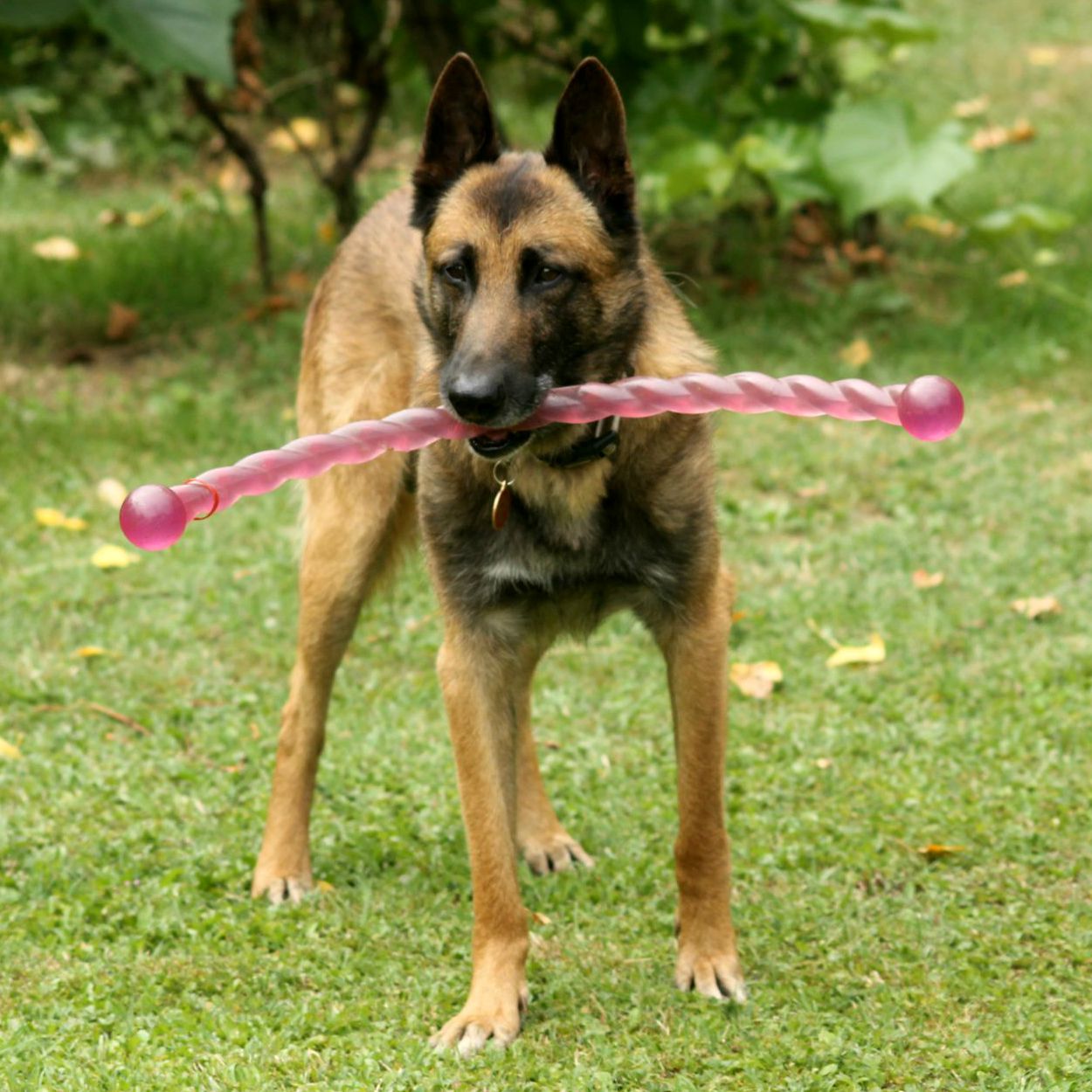
  4. This technique also works for toys. Start with a low-value toy and reward for letting go. Even Tobby, my toy-guarding monster, will drop his toys for a piece of meat. I’ll then give him take the toy again. I don’t ever want him to think, “I drop this item and I just get that…” otherwise he won’t drop it. In all honesty, Tobby is 14 and a Malinois without a history who has a toy guarding thing and a bitey thing. He is too old and it is too infrequent for me to need to remove his toys completely, so I save this for moments when I really need that toy back, like when a foster puppy arrives unexpectedly. He cannot tolerate other dogs trying to take his toys and so I don’t want him to feel that he has to guard his stuff from puppies. I also do this by offering him a better toy. I quickly noticed that there was a hierarchy of toys and that he would swap for some but not for others. With my younger dogs, it is vital that they give things up when I ask, including toys.
  5. With older dogs, remove all triggers until you know you have overcome any guarding behaviour. Food and toys are not things that should be lying around the house with a guarder. This is the main reason that we don’t leave out food or toys at the refuge – they can quickly become objects of value to dogs who are kept in small spaces without the same level of stimulus that they get in a home. Sadly, to make the refuge more stimulating with food, chews and toys would also make it worth guarding. With Little Miss, who was guarding me when I ate my pizza (or any bits that might drop on the floor, maybe, since she had already developed a begging habit before she got here) I removed myself. I went in the kitchen, closed the babygate and fussed and petted her when I finished. For Tilly, who guards bones or mouldy bread rolls, I do the “trade” routine when bone-time is over, and then I put them out of the way. Bone-time is over when I can’t supervise them any more; it’s the same with toy time. Living in a multi-dog household which often changes in numbers and levels of training, I don’t want a situation to arise in unsupervised time.
  6. Teach your dogs these things in isolation if you have a multi-dog household and then gradually change the environment and the presence of other animals. For instance, practise the Give and Trade behaviours in isolation, then have other dogs at a distance, before moving in closer and closer. Dogs don’t generalise well so just because you have taken their food bowl away from them doesn’t mean you will be able to get a stolen shoe back from them without a snap. Neither may they understand that because you have done Give and Trade in your living room that the same principles apply in the garden or on a walk.
  7. If your dog guards you, a valued resting spot, a toy or food, it is not a good time to try training them when they are guarding. Don’t punish them for their behaviour, just ignore them. An emotionally-charged moment is not the time to try and remove something from a dog, whether they have taken it in play or they have taken it to guard. It is not a teaching moment. Turn away and walk off. Keep them away from children or other animals at this point. Whilst Tobby’s toy-guarding is a bit of a problem, my other dogs and I will just walk off and leave him to it. When a crazy terrier foster took my boot before I was due to go out, he wanted to play. Chasing him would have been a great game. He needed a stooge to run from, so I walked away and went to the fridge. Sure enough, he dropped the boot and came running within two minutes. I was a bit late leaving, but better that than ten minutes of an angry ‘chase’ game in the garden. That of course was stealing for play and a little different, but the same principle applies: if you are not there, you are not going to take whatever they have. Plus, that fridge is an interesting place that is full of things that are way more interesting than a shoe nobody is playing with or a scarf that nobody else wants.
  8. Accept that your dogs in a multi-dog household will need to tell other dogs they are too near, and that this is not always an issue. Tilly is an invariable bowl dipper. She will happily go to everyone else’s bowl and stick her head in it if unsupervised. They’re so good-natured and the food is not so important to them that they’re bothered, so they let her. It’s not nice behaviour though. However, if she does it to Heston, or if Amigo – who finishes first – does it to Heston, he’ll give them a grumble. They’re too close. It serves its purpose and they back off. I know it horrified one prospective adoptant who came to see a puppy in my care that I let my dogs take care of telling puppies not to come near them when they are lying down. Yes, my dogs growl at each other from time to time, and yes I allow it. Stares and mild grumbles are the ways that dogs communicate. A puppy who doesn’t know this will never be well-socialised around dogs and this is a major problem for some of the older puppies who arrive with me: no dog has ever told them ‘back off!!’ and so they have never had to. For their own preservation, dogs need to understand dog language and if they rely on humans to intervene and keep them separate, then you have dogs who can never be unsupervised. These are dogs that inadvertently provoke others into biting them because they don’t understand when a dog growls, it is not playing and no human will come along to stop the escalation.
  9. Teach great bite inhibition at the same time. Then if you know you really, really need to, you can take something from them by force. I’m not ever going to be a fan of prising something out of a dog’s jaws, but I know with my dogs they’ll let me if I need to, like when one found a sheep carcass and “Leave it!” wasn’t enough.
  10. Dogs who resource guard should not be treated as “dominant” dogs. In fact, many are deeply insecure and afraid. Thus they are more likely to feel cornered and that they need to protect themselves from threat. Treating dogs such as this with negativity, punishment or hostility will only worsen conditions, not improve them. If you are worried about the level of hostility that your dog is showing around particular situations, seek help from a qualified behaviouralist who can help you get to the bottom of the problem and overcome it. E-collars, pinning and punishment may stop the behaviour as the dog “submits” but it does so at a huge emotional cost.

Here’s a couple of videos to help you with “Leave it!” and “Drop it!” and ignore the advertising! A guy’s got to make a living after all…

And the fabulous Emily from Kikopup. You can do the same with food bowls too.


What you need to know about dog bites that can save your dog’s life: Part Three

FBnotedogbite3

Following on from previous articles about dogs attacking other dogs and dogs biting adults this post focuses on advice to help you avoid the most catastrophic situation of all: when a dog bites a child.

In such cases, when a shelter dog, or a dog you have owned from a puppy, bites a child, there are few alternatives we consider other than euthanasia. Once a dog bites a human, a line has been crossed. As adults, we can reasonably ensure we can avoid such situations again in many circumstances. But when a dog has bitten a child, we may feel we have no other option than to destroy the dog. This is not to say that dogs who end up at the refuge having bitten a child are dogs that we euthanise: we take reasonable precautions in alerting new owners and insisting on homes where the dog will have the most limited of contact with children. We have had many successes in rehoming dogs who have been bitten because their new families understand exactly what has happened and have worked to retrain the dog.

Hopus is one such example.

hopus

A young spaniel, he had been taken to the vet to be euthanised. The vet thought the dog would not bite in other circumstances and performed a series of bite tests. Once the vet was happy that Hopus had some bite inhibition, we were able to offer him for adoption. He had a few moments of aggressive behaviour with other dogs in his new home, but his new owner, in a home without any children, was happy to re-train him. Over a year later and he is very settled. It took considerable faith and commitment from his new family to overcome a very serious problem and he is lucky to be alive.

But how does a dog like Hopus go for two years without biting and then suddenly snap?

Once we heard the story, it was easy to say with hindsight why this happened. A breed bought as a family dog that is still very much a field dog in need of exercise, young children, lack of respect for dogs, a dog who was two years old and had not had enough exercise or training, had never really been taught to inhibit his bites, mums who are busy being mums and not having enough time to focus on being dog owners… It’s a ticklist of circumstances that describes almost exactly every dog brought to the refuge because it’s bitten a child.

Fritzou was another dog adopted from the refuge who was brought back for biting a child. A nine year old terrier, he had been brought back to the refuge after a short time because he had bitten a child who had disturbed him in his bed. Now he is very happy with a lovely couple who understand that when Fritzou is asleep, he doesn’t like to be disturbed.

You can see the pattern… a dog bred for working with its mouth, young children, busy mums… add grumbly old age to the mix and you can understand why we say you should let sleeping dogs lie. All very well in retrospect!

So what can you do to make your home as safe as possible? How can dogs and children live harmoniously?

First is in your choice of dog. Some dogs are recorded as high-frequency biters because there are a lot of them. Forget about what you believe about labradors being great family dogs- they’re on the bite list. They are also many countries’ most popular breed, though, which accounts for the numbers. Little dogs are not exempt: spitz, minpins and chihuahuas can have a real temper. Collies and heelers are prone to herding and nipping: I saw an Australian Shepherd nipping at a child’s feet last summer – the child was laughing and I was horrified. Cockers are known for their tempers – a fault of in-breeding. Malinois and GSDs are also on the list. Molosser breeds, rottweilers and dobies are on the list too. And although a little dog may seem like a great idea, many have not been sufficiently bite-proofed simply because they are small and their owners find it less important than you would if you owned a rottie.

The second thing to consider is the dog’s nature and age. Young dogs can be hugely tolerant of grabby hands, but as they age, they may snap when they never have before. A fearful dog is more likely to bite as well. Believe it or not, many dogs are scared of children if they have never been socialised with children. Only last week a griffon froze under a tree and couldn’t be moved. The problem? He was being walked by a lady with children and he’d got spooked. He came out as soon as the children had gone. And they were great children – gentle and sensible. Being small can be freaky to a dog.

Once you have picked a dog that is right for your children, it’s time to ensure your children have great manners around dogs. 77% of bites come from a dog that is known to the person it bites: it’s not strange dogs that you have to be worried about around your children.

Before getting a new dog, even if your children are familiar with dogs, please go through the ground-rules with them.

  1. We don’t disturb sleeping dogs. We don’t go in dogs’ beds and we don’t invade their space.
  2. We don’t corner dogs and we always make sure they have plenty of space.
  3. We don’t disturb dogs when they are eating. We never interrupt them if they have a treat.
  4. We don’t hug dogs, even if they let us.
  5. We don’t encourage them to jump up by waving our hands about.
  6. We don’t kiss dogs.
  7. We don’t pick dogs up.
  8. We don’t take the dog’s things off them.
  9. We don’t discipline dogs, smack them, shout at them or tell them off.
  10. We don’t yell at dogs or frighten them with loud voices.

This video is a great starting point for young children

If children follow these basic rules, you will find that the situations which drive dogs to bite are minimised.

There are lots of great resources to be found at

Stopthe77.com

The Family Dog

Jimmy’s Dog House videos

Preventing dog bites is the one thing all parents should put at the top of their agenda, and making sure dogs and kids feel happy around one another is the best way to ensure that. If only everybody spent a little time at the beginning of their doggie relationship giving space rather than cuddles, giving boundaries and foundations rather than kisses and giving dogs time to adjust, far fewer dogs would be returned to the refuge under the black cloud of being a biter.

The sad fact is that most people choose to euthanise a healthy dog that may never bite ever again simply because they did not take adequate advice from the shelter about which dogs would make good family pets and because they did not dog-proof their children.

There are seven million dogs in France, and every single one of them is capable of biting under the ‘perfect storm’ of circumstances. As the American Veterinary Medical Association say: “the majority of bites, if not all, are preventable.” Most dog bites involve children. Most dog bites involve a familiar dog. Most dog bites involve everyday interaction between children and dogs. It is up to us as owners to make sure that children understand the boundaries that dogs have. There is nothing more frustrating than listening to someone recounting events when returning a dog knowing that the bite was entirely preventable. There is also nothing more frustrating than seeing parents take risks with their children’s lives and health.

By being proactive, parents can ensure their children are safe around dogs and that their dogs are safe around children. It is better never to cross that line than constantly test it – as it is a line that, once crossed, can never be uncrossed.